

Equine Bio Genie are World leaders in environmental health, providing yard treatment services to both private and commercial clients and offering products to enable horse owners to take care of the bio security of their stables.
But what exactly is bio security, why is it so important and how do we manage it, Bio Genie explains all…
The environmental condition we keep our horses in is important in order to prevent them from contracting infections, particularly at such a time when they are travelling or under competition or training stresses. This is when they are at their most vulnerable to contracting infections… respiratory or otherwise.
In this capacity, our role as custodians of the equine population is to manage the pathogenic load in our horses environment, as we keep them in a stabled environment for a large proportion of their day to day life.
Many of the equine pathogens are known as ‘opportunistic’, which means the horses will co-exist in the presence of certain harmful micro-organisms until such a time when they become immunosuppressed… this is when horses are most at risk of picking up infection, so the condition in which they are kept must be as healthy as possible.
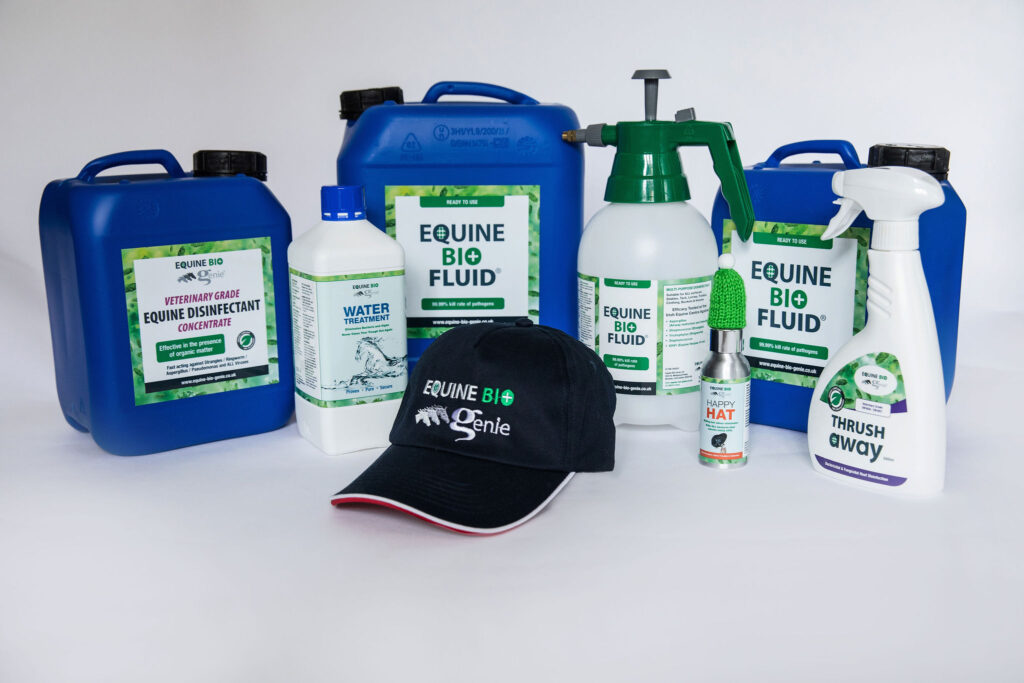
Good airflow, maximising exposure to natural sunlight and basic cleaning is important, but the distinction between cleaning and effective disinfection must be understood.
Many commonly used disinfectants are ineffective in the presence of organic matter, have microbial resistance built up against them and will leave toxic residue within the environment, so it is critical the right biocidal products are chosen and the proper advice taken to ensure proper practice.
Definition of Biosecurity
Biosecurity is a set of practical measures we can put in place to prevent the introduction and the spread of harmful micro-organisms that can adversely affect our horses.
Stable condition
While a horse is stabled it is exposed to environmental pathogens such as bacteria, spores and fungi. Many respiratory pathogens thrive in dark, damp areas where lack of sunlight, airflow and increased moisture can combine to create a perfect environment for bacterial and fungal growth – in addition to this, one can unwittingly import spores and organic matter via hay and forage which can harbour spores, dust and bacteria. In the absence of as much sunlight (natural sunlight being anti-bacterial), good ventilation and airflow becomes more important.
Top tips
Keep your horses environment ventilated – this means good airflow. NOT just opening the barn doors but maintaining gaps above the horses head for air to circulate – air will leave a building much quicker than entering it, so the flow of air is vital. In turn this helps avoid the manifestation of damp areas in which bacteria can also thrive.
Equine pathogens are ‘Opportunistic’ so they attack the more immune-suppressed horses… if the environment is as low as possible in bacterial, fungal and virucidal load, the horses will have a much better chance of fighting infection.
360 degree biosecurity - Water
Water – often the forgotten nutrient, but essential – the focus on biosecurity needs to be all encompassing and cover 360 degrees across AIR, SURFACES and WATER…equine pathogens can survive and thrive in the environment and in water for extended periods of time given the right conditions, and we must be cognisant of this to prevent ingestion of these harmful micro-organisms. We must keep water clean and clear and be conscious of sharing and cross contamination through shared water sources, whether buckets, troughs or hosepipes.
A regular and effective treatment and biosecurity protocol that is efficacious and safe for horse, user and the environment is paramount to maximising the potential of our horses. Keeping the bacterial, fungal and virucidal load as low as possible is critical.
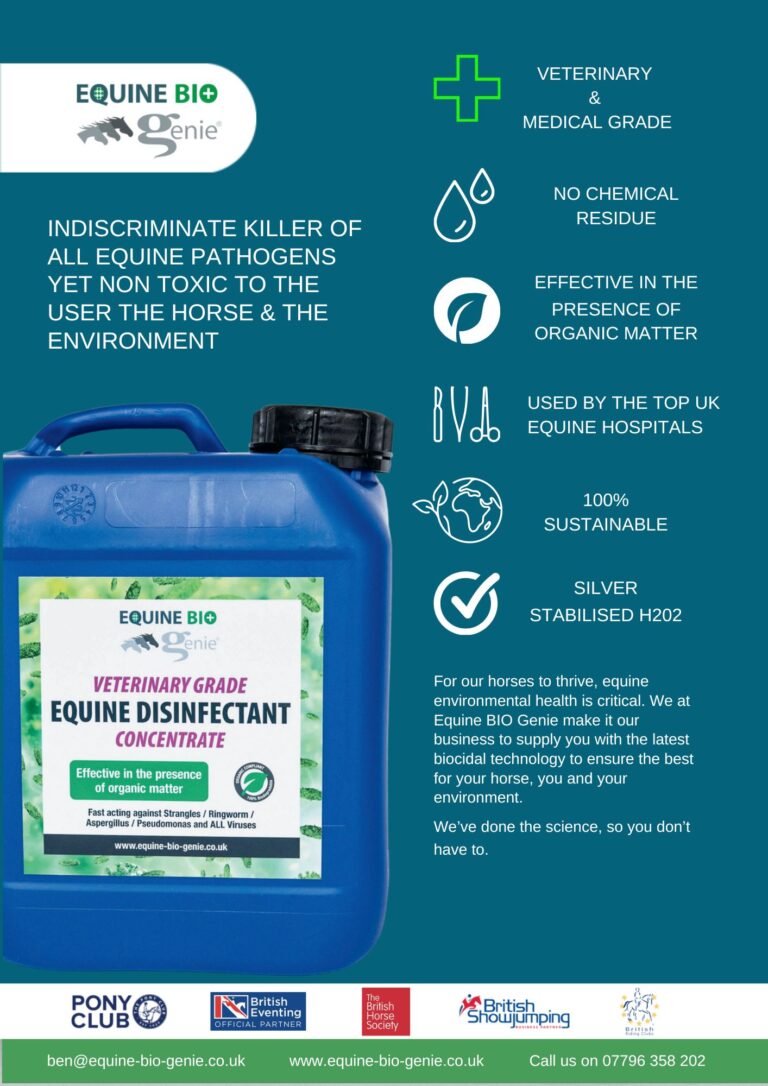
Thank you Equine Bio Genie, you can find out more about them, their services and products below:
Connect with Equine Bio Genie