Following on from Part one (read here), you’ve read the advert, watched the videos, spoken to the seller on the phone, done some googling and Facebook stalking, looked at previous competition records and you’ve decided that you might like to see the horse in person.
Exciting right..? Not always!
We look at what to do, ask, say, not say and expect when it comes to trying a horse.
One of the best pieces of advice that we can give is go in with a very open mind and don’t let emotions cloud your judgement. There are so many trustworthy, brilliant, honest sellers out there, but unfortunately there are some that are not – so as well as trying the horse you also need to be a bit of a detective…!
Remember that you can discontinue the viewing at any time
Turn up a few minutes early ahead of your allocated time (not in a rude way) so that you can see what’s happening on the yard. Introduce yourself and engage in conversation – the more you put the seller at ease the more information you’re likely to get from them. As in our last article it’s more about what people don’t say – than what they do say! Ask all of the questions that you asked on the phone to ensure that the answers are consistent and if not then ask them to expand. Remember you are in the driving seat.
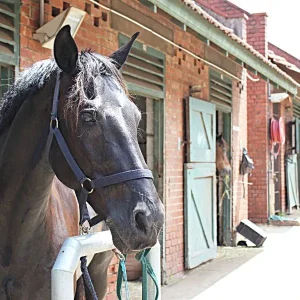
Assess and watch the horse in the stable. Check the respiratory rate and for any signs of sweat. It’s not uncommon for highly strung horses to have already been worked the same day to take the edge off them…
Check to see if they are eating, how they are eating – are they dropping any food when they eat?
Are they unusually resting a leg – is it always the same leg? What is their temperament like? Are they inquisitive, or do they just want to be left alone? Are they grumpy around their food?
A horse with their head down in the stable, uninterested in people, and no food available would ring immediate alarm bells for signs of potentially being sedated. Yes this really does happen!
Equally a horse pacing around their box looking for their friends might not be a suitable fit for someone wanting a quiet best friend.
Ask how long the horse has been in the stable (also check the number of droppings), what is their daily routine? Are there horses next door? Is this because they need their friends in with them when they come in during the day – are there any separation issues? All of these things are really important when it comes to managing the horse at your own yard.
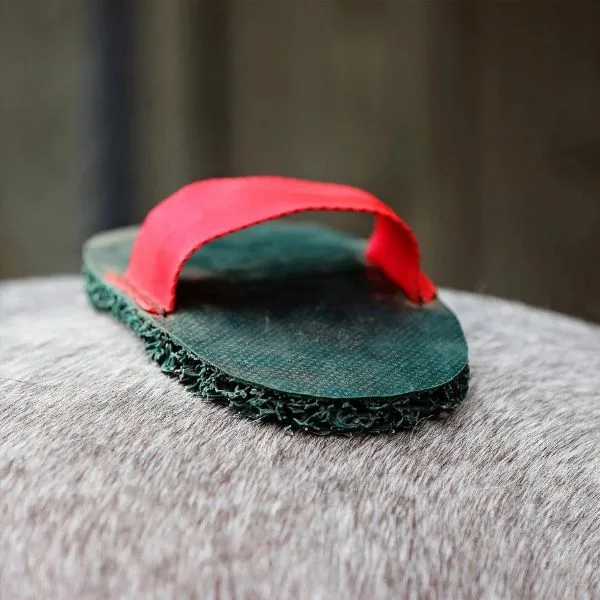
Ask for the rugs to be taken off (if they are on) and stand back to watch the horse bring brushed. Assess the condition – are there any areas of asymmetry when it comes to the muscles. Are there any areas of discomfort, tail swishing etc. Take the opportunity to visually check for any signs of lumps, bumps, marks, sarcoids, sweat patches and run your hands all over the horse. Can you feel anything that hasn’t been disclosed, any swellings on the legs, or digital pulses etc. Ask the seller questions as you go. You may also ask to see the horse trotted up in hand to check to see they are sound.
Watch the horse being tacked up. You can learn so much from watching rather than getting involved so take the opportunity to stand back and watch. Is the horse comfortable around their head, do they object to the saddle going on, or being girthed – this could be signs of gastric ulcers, or back pain. Observe to see if the saddle fits well enough. Is the saddle pad or girth wet with sweat? If so – don’t be shy – ask the owner why.
Watch the horse being led out of the stable – do they walk out evenly and willingly. Always ask the owner/rider to get on first. Do they stand well at the block, or do they shoot off like a rocket?
Not standing might not bother you – but if you are a certain age and not as quick and nimble are you maybe once were it might be something to consider and can also indicate signs of discomfort. Be realistic about what you can manage when you get home and the horse is unsure and in a new environment.

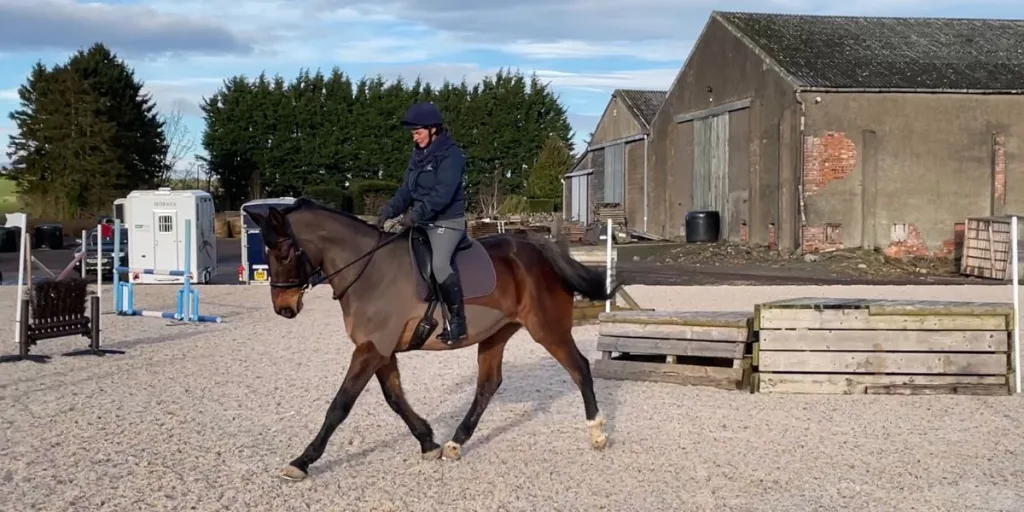
Watch the horse from the ground and ask someone else to take videos. Do they move straight, are they even around corners and on the circle – is the rider managing lots of hidden issues – do they look tense of relaxed? Are they even both ways? If you want to jump then ask to see them jump.
Remember that a professional rider will usually make a horse look easy, and take into consideration the effect the rider may be having on the horse.
If you are a nervous rider getting on a new horse for the first time can be quite nerve wracking – but remember you are there to try the horse – the horse isn’t there to try you. The seller isn’t there to judge you – they want to sell their horse. Do what you are comfortable with and no more.
When you ride it’s important to think of the horse rather than yourself. Do you feel even, are they happy to go forwards off the leg. What are the horses ears telling you? Do they bend fairly evenly both ways? In trot try changing your diagonal- does it then feel horrendous? Do they feel equal on each rein? Feeling a shift as you change the rein and your diagonal in trot is a great indicator that there may be an underlying issue.
Ride a few figures of eight and serpentines, you may also want to ride some basic lateral work depending on the stage the horse is at in their training.
If you feel happy then try them over a fence. You don’t need to jump big fences to get a feel of what they are like so don’t put any pressure on yourself. Is the horse as fit as they implied when you asked? Is there anything they struggle with?
Remember to ask someone to video you so that you can watch and reflect.
Ask what the horse is like to ride in different scenarios, for example a group lesson on grass, cross country training, a group hack etc. Do they always go in the bit that you are riding in?
Do you feel safe? Do you have a smile on your face? Do you want to come and ride this horse again? If the answer is no, or I’m not sure, to any of those questions then it’s an easy decision. Just get off.
If it is yes, then is there an opportunity to ride the horse on a short hack/in an open space? Horses can be very different in an arena and if hacking is important to you then you want to know that they are good to hack.

Ask the owner directly what they think about you and the horse as a potential combination… a decent owner/seller will want what is best for their horse and if they have any reservations about your ability compared to the horse’s temperament/training stage then it gives them a polite opportunity to voice it.
Don’t waste time – if you know it’s not the horse for you – just say. I’ve been in a situation where I’ve ridden one circle, got off and thanked the seller for their time as I knew it wasn’t the horse for me. It’s not offensive – it’s saving time for everyone.
Providing everything has gone well then ask if you can untack the horse and give them a quick brush/wash off. How is their behaviour and demeanour? Do you like the horse as a person?
Take the opportunity to feel the legs once again to check for any signs of heat or swelling.
If you really like the horse then that is brilliant – but don’t rush into a commitment. Take a little time to think, watch the videos and even ask if there is the opportunity to try the horse again and maybe bring a professional with you.
Would there be the possibility of trying the horse somewhere different to see what they are like away from home?
It’s not uncommon for the seller to say that they have five other people wanting to see the horse – and they might! Don’t let this pressure you – but equally if you are serious then you’ll need to make a second viewing happen quickly.
Trust your gut… if you get off asking yourself, your friend, your coach, your partner, your aunty and everyone else if this is the horse for you then it ISN’T!! If this horse is right for you you’ll know.
If your gut, your head and your heart are all on the same page then it’s time to chat money, ask if there is anything else included in the sale and think about a pre purchase examination (vetting).
We cannot stress how important this is no matter how experienced you are. You’re making a huge investment so you need to make sure it’s a good one…