
I have always loved horses and have ridden on and off since I was a kid, but it wasn’t until I met my husband that I became involved with racehorses.
He was an avid racing follower and had a few National Hunt horses kept at a local yard. I went from a novice racehorse owner to breeding two foals and keeping some of our retired horses, and it has become quite the addiction.
As you can tell I quickly fell utterly in love with horse racing but also with Thoroughbreds. They are really misunderstood and quite often find themselves in the wrong hands after their racing career ends and become labelled tricky and “troubled horses”, where actually they are highly tuned athletes who have been incorrectly paired with a novice rider and not retrained correctly (or at all).
It’s a huge responsibility of the racehorse owner to ensure that they have a brilliant home following their career although some horses are easier than others to re home and find a new purpose for.

In general the horses we have are National Hunt horses. They will jump fences and hurdles on the racecourse rather than a flat horse. You will often find National Hunt Thoroughbreds are bigger than a flat bred Thoroughbred.
However, just because they have the height it doesn’t mean they are suitable for tall riders or that they should be weight carriers following their career. In general, a National Hunt horse will be lightly broken at three or four years old and turned away to mature for a period.
They are then brought back into work ready to race, most commonly at five years old. It’s quite different in flat racing where the horses are racing at only two years old. Most horses thrive off routine and in general most of our racehorses have enjoyed the set routine which they have in training. They are worked six days a week doing a variety of fitness, hacking and schooling work with one rest day.
When in training it’s undeniable, the horses work hard but they usually have a prolonged period of rest often two to three months, in the summer to enjoy some downtime and “be horses”.
Anyone who owns horses of any kind will know that it doesn’t come without heartbreak. We have lost several horses in our time as owners and it does not get any easier, as they are much loved by us and the girls and lads who care for them on the yard on a day-to-day basis.
The trainers too adore their horses, as it isn’t just an industry to them. One of our beloved horses who we had owned for a number of years had a field accident and broke his leg and had to be put to sleep a few years ago. He was due to retire in a year and it breaks my heart that he didn’t get to enjoy the long and happy retirement that he deserved. He has a beautiful plaque and patch of wildflowers in his favourite spot at the trainer’s yard as he was a true yard favourite. I still well up when I think of Benny.
Rehoming racehorses
Gosh onto the more positive, the rehoming and repurposing of a racehorse. Even with the best will in the world you cannot control what happens to a horse once it leaves your care, so selecting the person to take care of the horse after racing is really very important.
With the help of the racehorse trainer, we decide what is best and when is the right time for a horse to retire. Our goal is that all our horses retire sound and don’t retire only when they sustain a career ending injury. We would then discuss what discipline the horse would be suitable for and then start looking for a home.
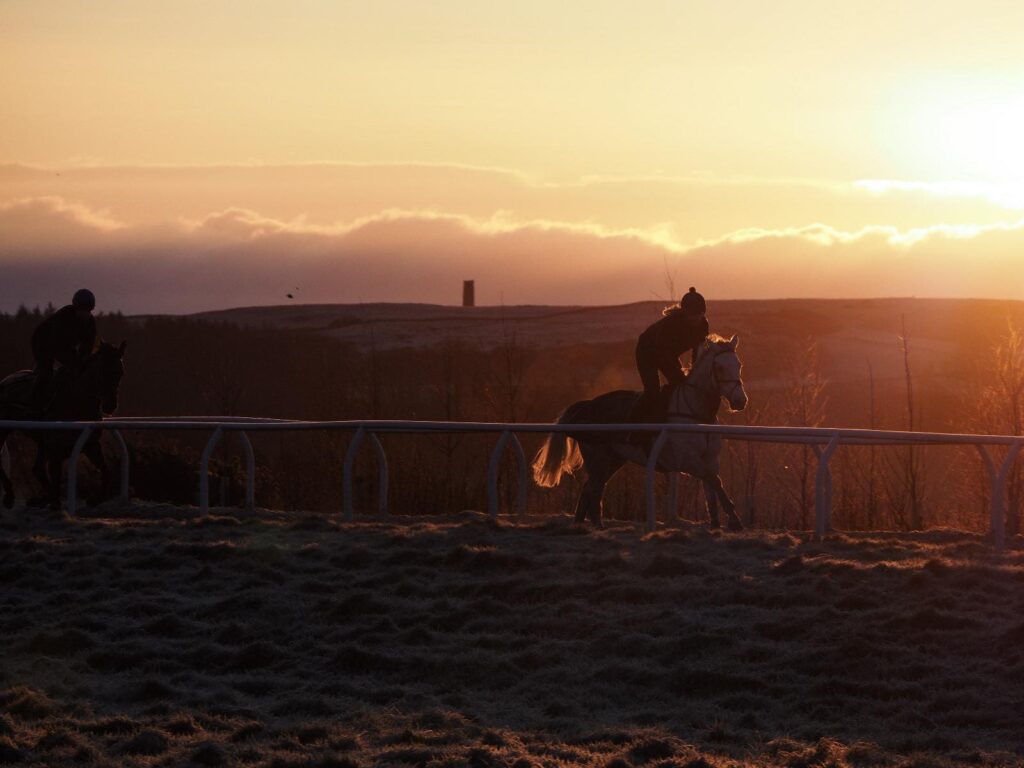
This year we had a wonderful horse called Neasy retire sound. He had multiple wins and placings for us as a racehorse but he was a tricky horse to keep happy. He was a chronic box walker and worrier so was kept out 24/7 even while in training to ensure his mind was happy and healthy.
He won a race this season but each race following he just didn’t seem to have the same zest. We realised the horse was telling us he wasn’t enjoying the racing side of things as he had always done before. He owed us absolutely nothing and we decided to retire him for no consideration to his work rider.
He now lives on the farm with her in a huge field and open barn to come and go as he pleases and is used for light hacking. It really is the happiest ending for me and for him. His work rider always utterly adored him and knew his quirks and accommodates them well. Yes we probably could have sold him for a few thousand pounds, but it probably wouldn’t have been the right home for him. We wanted him to have the best home and were delighted to give him to his rider to enjoy a long and happy retirement. I get regular updates on him and she knows should her circumstances ever change he can come back to us.
It isn't always that easy!
It isn’t always that easy! horse as my wedding present from my husband. It really was an idyllic story, I picked him as a youngster blindly from the field and based on his pedigree. His breeder became our good friend and he became one of our best race horses winning at the Galway festival (a dream of my husband to have a Galway festival winner, it was just unfortunate it was in the midst of lockdown and no spectators were allowed).
Bua Boy or Boo as he is called is a wonderful horse, but he is the epitome of a finely tuned athlete, he is highly strung and a challenging ride. I know I will never sell him on when he retires, but I’m not sure my riding skills will be capable enough to steer him round the white boards. I asked his trainer what he thought about Boo doing dressage when he retired from racing and he confidently said he would kill me. He might be one who just gets to enjoy a lovely long retirement unridden in a paddock if he doesn’t settle.
I have my own wonderful dressage schoolmaster but I have no experience in re-schooling and that is such a huge part of the process. As I write this blog post I have one of our horses on his way from Ireland who has just retired.
Wild Hunt is a wonderful chunky Thoroughbred who I hope to eventually show and do some dressage on, but his main role will be teaching my husband to ride. He is coming to have a holiday at ours for a few weeks to wind down and relax, then go to one of the girls at our racehorse yard for retraining.
She will start the retraining and assess his suitability. I will get lessons from her on him and when ready he will come home to continue his education. I have already been assured he is a quiet, nice moving sort so will make a great ridden horse. I’m really excited to give one of our horses a new career and hope we will make a great partnership.

I fully believe that the initial retraining is the most important, it allows the horse to be fully assessed outside of a racing environment to see if they would make an eventing, happy hacker or dressage horse. I think it’s morally wrong to place a powerful horse that you know would be a machine on cross country with an amateur mother and daughter to share with no facility and support. Therefore getting the right match is so important for us. Rehoming them sound to a good home is so much more important than money.
I obviously can’t keep them all, and like I said about Bua Boy, he is one I would never re home and while he would excel at eventing, I like to keep my feet firmly on the ground, so he might get to enjoy a leisurely retirement. We personally love to follow them in their new homes whenever we can. Seeing your horse thrive in a new environment is exceedingly rewarding. I would recommend getting an ex racer as a horse, just please accept that it will need retrained and that takes time and money.
As for me, it will be – watch this space and hopefully you will see me and Wild Hunt at a Equiteam camp soon!
Katie x