

As the grass starts to grow, many horse owners begin to worry about weight gain, laminitis risk and controlling grazing. For horses and ponies that are “good doers,” managing grass intake is essential for long-term health.
One management option that is becoming increasingly popular is the grazing muzzle. When fitted and used correctly, a grazing muzzle can help horses continue to enjoy turnout while significantly reducing the amount of grass they consume.
In this blog, we’ll explore how grazing muzzles work, how to choose the right one, and why they can often be a better option than restricting turnout altogether.
Why Managing Grass Intake Matters
Spring and summer grass can contain high levels of sugar and calories, which can lead to:
- Excess weight gain
- Increased laminitis risk
- Metabolic issues
- Reduced fitness and performance
For many horses, especially native breeds, ponies and those prone to laminitis, careful grass management is an important part of responsible horse care.
Grazing Muzzle vs Restricted Turnout
Many owners try to manage grass intake by limiting turnout time. While this can help reduce calorie intake, it can also come with some downsides.
Restricted Turnout
Limiting the amount of time a horse spends in the field can:
- Reduce opportunities for natural movement
- Limit social interaction with other horses
- Increase stress and frustration
- Lead to more stable time, which may contribute to boredom or stereotypical behaviours
Benefits of a Grazing Muzzle
A grazing muzzle allows horses to remain turned out while reducing grass intake by approximately 50–86%.
This means horses can still:
- Move freely
- Socialise with their herd
- Express natural behaviours such as grazing and exploring
- Maintain a healthier digestive system through more continuous forage intake
For many horses, this approach offers a better balance between weight management and welfare.
How to Choose the Right Grazing Muzzle
1. Prioritise Safety
Safety should always come first.
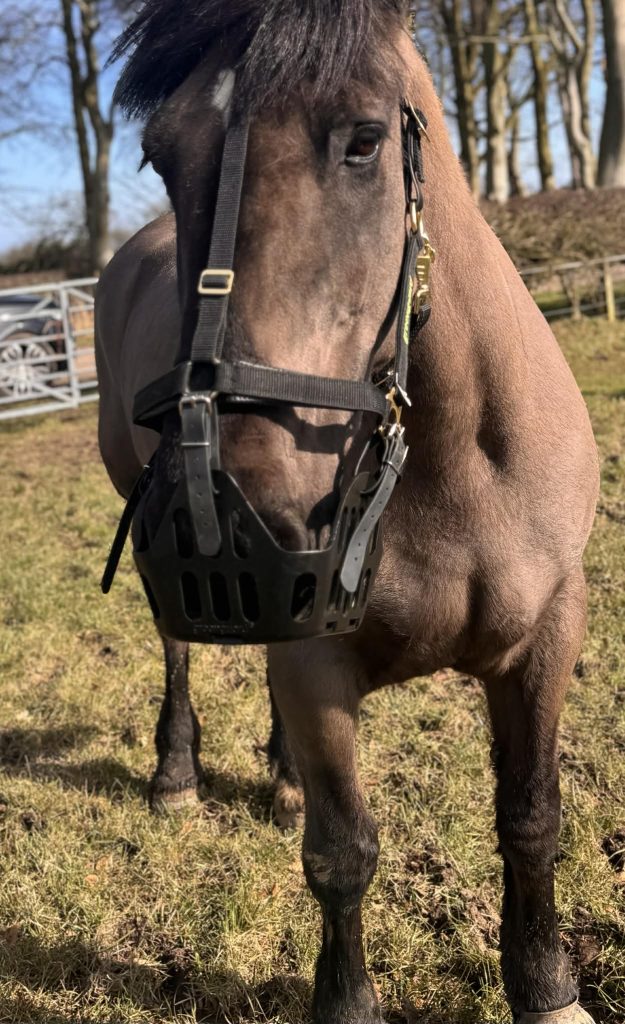
Choose a grazing muzzle with a breakaway safety mechanism, such as:
- A leather headpiece
- Breakaway clips
- Safety-release fastenings
These features ensure the horse can break free if the muzzle becomes caught on fencing, branches or other objects.
2. Choose the Right Material and Design
Different muzzle designs suit different horses.
Moulded or Plastic Designs
Examples include basket-style muzzles.
Benefits include:
- Good airflow
- Less contact around the mouth
- Reduced rubbing for some horses
These designs tend to hang slightly away from the mouth, which many horses find more comfortable.
Flexible or Nylon Designs
Some muzzles are made from softer materials and may include:
- Fleece lining
- Neoprene padding
- Flexible basket material
These can be ideal for horses with sensitive skin or those prone to rubbing.
3. Consider the Grazing Hole Size
The size of the hole at the base of the muzzle determines how restrictive it is.
Typical guidelines include:
- 2–2.5 cm hole – higher restriction (often used for horses needing stricter weight control)
- 3.5–4 cm hole – less restrictive and suitable for longer periods of turnout
The correct level of restriction will depend on:
- Your horse’s weight
- Laminitis risk
- Grass availability
- Veterinary advice
5. Houdini-Proof Designs
Some horses quickly learn how to remove their muzzles.
If your horse is particularly clever, look for designs with:
- Multi-point attachments
- Secure straps
- Additional helper straps to prevent slipping
Getting the Fit Right
Correct fitting is essential for both comfort and effectiveness.
Start with the Right Size
Most horses wear the same size muzzle as their halter or headcollar, but some breeds with wider noses may need adjustments.
The Two-Finger Rule
You should be able to fit two to three fingers between the muzzle and the horse’s face.
This ensures the muzzle is secure without being too tight.
Check the Depth
There should be around 2.5 cm (1 inch) between the horse’s lips and the base of the muzzle.
This allows the horse to:
- Drink comfortably
- Rest their mouth when not grazing
Strap Position
The cheek straps should sit vertically and evenly, similar to a well-fitted headcollar.
Introducing a Grazing Muzzle
Not all horses understand a grazing muzzle immediately.
To help them adjust:
- Start with short sessions
- Allow them to explore wearing it
- Place a little hay or grass through the hole so they understand how to eat
Most horses learn very quickly.
Important Management Tips
Avoid 24-Hour Use
Grazing muzzles should not be worn continuously.
Many experts recommend a maximum of 10–12 hours per day to allow:
- Grooming
- Skin checks
- Normal behaviour without the muzzle
Check Daily for Rubs
Common areas to monitor include:
- Chin
- Nose
- Jawline
Adding fleece or neoprene padding can help prevent rubbing.
Monitor Herd Dynamics
Ensure your horse is not being bullied, as wearing a muzzle may limit their ability to defend themselves.
Inspect the Muzzle Regularly
Check for:
- Sharp edges
- Broken parts
- Loose stitching
Regular checks ensure the muzzle remains safe and comfortable.
Final Thoughts
For many horses and ponies, a grazing muzzle can be an extremely useful management tool.
By allowing turnout while reducing grass intake, muzzles can help support:
- Healthy weight management
- Reduced laminitis risk
- Improved welfare through continued turnout and social interaction
With the right fit, careful introduction and regular monitoring, a grazing muzzle can be a practical way to balance health, nutrition and quality of life for your horse.