

The grass growing in your horse’s paddock can be and should be an incredibly valuable resource for your horse – providing a diverse, nutritious and healthy feed, while also creating a haven for insects, birds and other wildlife.
But in the UK, we have become used to seeing horse ‘lawns’ – with a tightly cropped, surface cleared of droppings. This often gets muddy in winter, particularly around gateways and troughs and droughted in summer. Neither situations are conducive to quality horse grazing.
I am a freelance writer, mainly writing about cattle and sheep farmers who are now keeping their animals in a more natural way. This regenerative type of farming is bringing back life to soil and pastures and encouraging bio-diversity. Some have taken these principles and are applying it to their horse grazing too.
Pasture for Life farming
Radka Gromnicova is one of these Pasture for Life farmers, selling 100% grass-fed beef and lamb and pastured chickens and pork, near Milton Keynes. Six years ago she started looking into different ways of managing pasture for her thoroughbred Ken and Andalusian Pal.
She says, “I soon realised that is we want our horses to get their nutrition from the grass it should be thick, tall and offer variety so they can pick and choose what they need. A one-centimetre lawn offers them nothing.
“Short grass usually results from overgrazing. When horses try to eat grass that is trying to regrow – using the limited energy reserves in its stalk and roots – and the emerging shoots are bitten off again and again, the plant is weakened and will eventually die. Young grass shoots are also full of sugar which are not ideal for horses prone to laminitis or colic. They also lack fibre which should be an essential element of their diet.”
Tall Grass Grazing
The type of grazing Radka put in place is known as Tall Grass grazing. This is where the grass is given two to three months to recover from grazing, during which time it has chance to grow roots deep into the soil.
Short grass above the soil surface has short roots in the ground. So it cannot access nutrients, minerals or water deeper down, which is why horse paddocks often dry out in hot summers. Longer grass has longer roots, creating better drainage for rainwater, reducing the muddy patches.
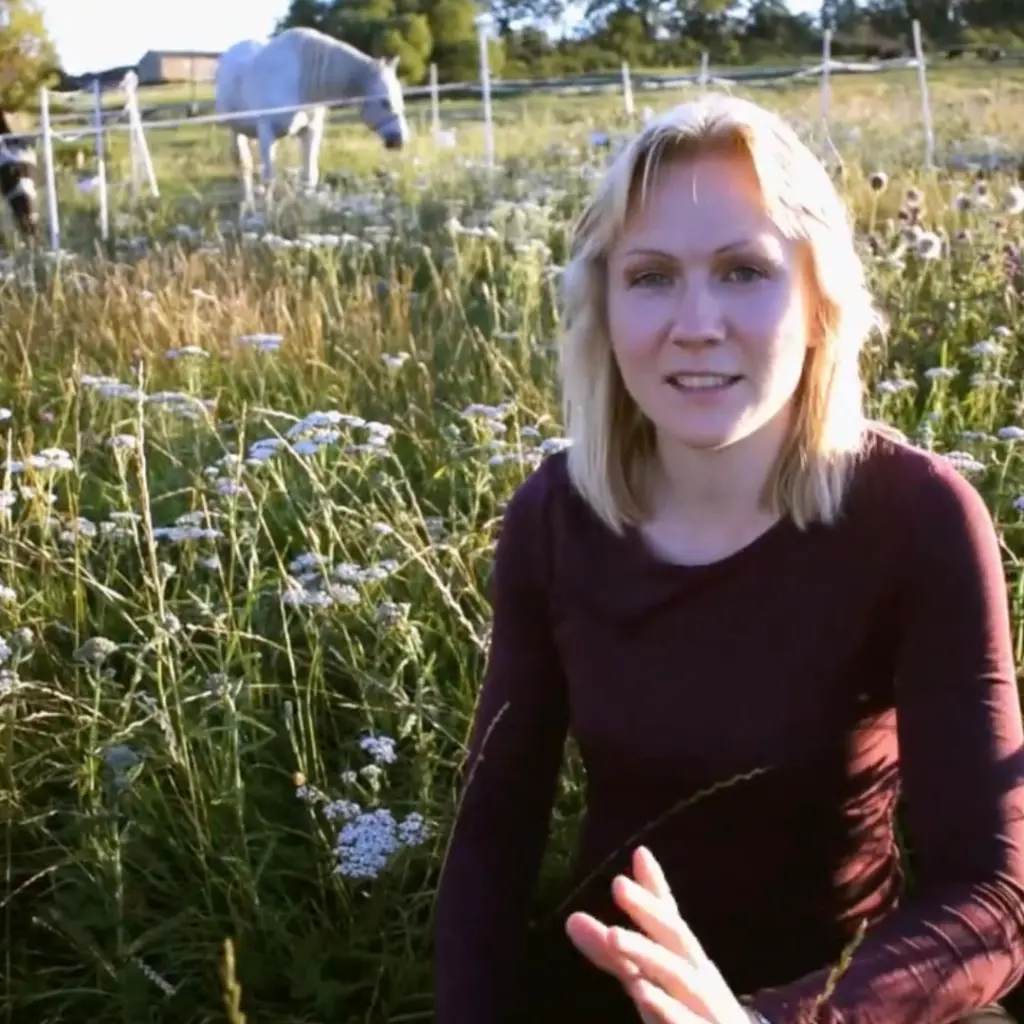
Radka says that horses like eating tall, stalky grass because it gives them a varied diet of different grasses and herbs such as plantain and yarrow. There was so much more for them to eat in the field she soon gave up buying any hard feed and fed less hay than in previous winters.
Grazing Units
How does this system work? Well it does need planning to ensure the horses have enough to eat and that there is a long enough rest period for the pasture to recover.
Each field needs splitting into ‘grazing units’, allowing 4,000m2 for each 15-hand high horse.
Radka located her field on Google maps and drew around it, allocating 80m2 per horse per grazing unit to see how many units she could fit into the field. This turned out to be 47 units for the two horses. With them spending two days in each, each piece of ground has 94 days’ rest. The minimum recommended rest period is 60 days.
Electric fencing is used to cordon off each unit and a mobile water trough is moved at the same time. Controlled grazing like this does not allow for horses to canter or gallop in the field. But regular riding or lunging will make up for this.
Worming can also become a thing of the past, as a rest period of at least five weeks breaks the parasite cycle. This also means an end to poo-picking which means the manure can be left to return its nutrients back into the soil and will have disappeared when the horses come back to the unit.
Tall grass grazing has been transformational for Radka. By restoring a traditional meadow she is restoring life and health into the soil, encouraging wildlife that feeds on the tall and varied plants, and helping protect the environment by storing carbon in the soil. The horses are well nourished and content and moving the fence every two to three days takes just a few minutes.
See more on Radka’s story with before and after photos at https://www.3lm.network/managing-horses-holistically
Horse owners thinking about transitioning to tall grass grazing need to take time to create a thorough and long-term plan.
See here for more in a blog from Jane Myers who has an MSc in Equine Science:
https://www.equiculture.net/blog/switching-a-horse-to-grazing-longer-grass-plants
What can I do to protect pasture without going as far as tall grass grazing?
- Put horses onto some hard-standing or a sacrifice paddock when it is too wet or too dry to give the pasture a rest and prevent mud baths/deserts.
- Rotational grazing rather than set stocking i.e. letting the horses out to roam in the whole field. Split the fields into as many paddocks as possible using electric fencing and rotate the horses around these.
Thank you to Sara for this insight into tall grass grazing. You can read more from Sara at talkinggrass.co.uk.
Twitter @TalkingGrass
Instagram @grassyandgreen